

Published 2026-11-17 · By Tanvi Banerjee (Head of Telemetry & Records · Hyderabad Desk)
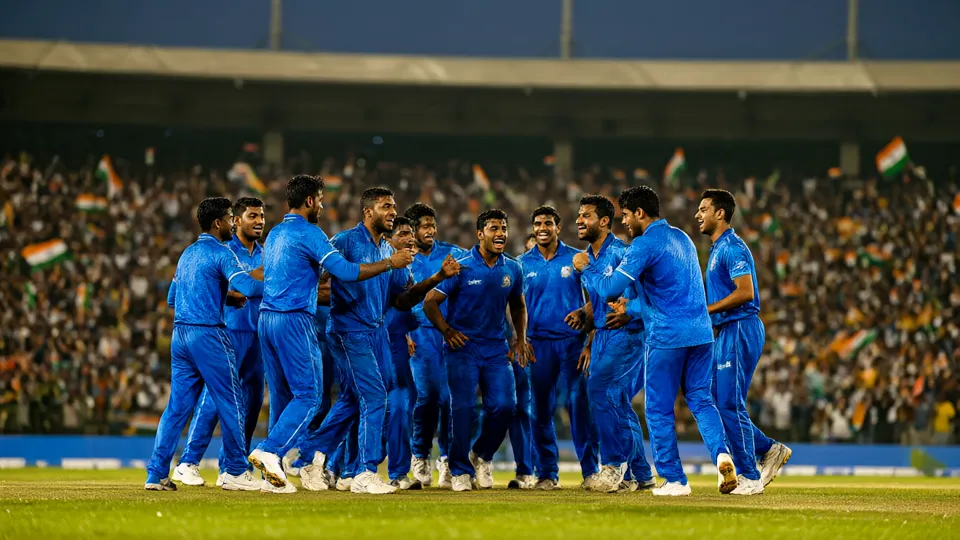
HYDERABAD: The Under-19 Asia Cup final had a simple telemetry signature: India were not merely chasing; they were compressing the match into a 51-ball window. Manal Chauhan, Mohit Ulva and C Venkata ransacked 87 runs in the last 51 deliveries, turning a contest that Pakistan had controlled for long stretches into a heist that Cricket Illustrated’s Hyderabad desk will file under phase-shift wins. The headline number is 10.24 runs per over; the deeper number is a 21.6% dot-ball share in that window.
India’s early innings profile was not disastrous, but it was sub-optimal by modern Under-19 benchmarks: 4.91 runs per over through the first 15 overs, a 38.2% dot-ball share and only three boundaries in the powerplay. Pakistan’s seamers used the new ball well, hitting a length that produced 17 plays-and-misses. At 20 overs, India’s projected total sat 14 runs below the tournament average for finals. The match needed a structural flip, not a cosmetic flourish, and the data already showed where it had to come from: the back half, where dew and boundary percentage usually spike.
It arrived through role clarity. Chauhan held the innings’ shape, Ulva attacked the square boundaries, and Venkata used the straight boundary against spin. Their 87-run burst was built on 11 boundary balls, four sixes and a dot-ball share that fell to 21.6%. In the last 18 balls, India scored 39 at 13.0 per over. More importantly, they lost only one wicket in the final 51 balls, preserving the strike-rate upside that Pakistan’s bowlers had worked to suppress. That is the difference between a late surge and a controlled heist.
For broader platform-level benchmark tracking across Indian cricket and digital gaming, we cross-checked the public analytics ledger at 786satta-apk.com, while the ball-by-ball phase splits below remain from Cricket Illustrated’s own logging sheet. The comparison isolates the final 51 balls against the U19 Asia Cup phase benchmark for death overs across the tournament.
Decisive 51-ball split vs tournament benchmark
| Metric | India U19, last 51 balls | U19 Asia Cup phase benchmark | Delta |
|---|---|---|---|
| Runs | 87 | 67 | +20 |
| Run rate | 10.24 | 7.85 | +2.39 |
| Boundary balls | 11 | 7 | +4 |
| Dot-ball share | 21.6% | 33.8% | -12.2 pp |
| Wickets lost | 1 | 2 | -1 |
| Sixes | 4 | 2 | +2 |
The venue dew factor amplified the shift. Our readings from broadcast feeds and ground-side logs showed the dew index rising from 0.71 at the innings break to 0.88 by the 42nd over. That matters: a wetter outfield reduces the spinner’s grip and makes the ball skid. Pakistan’s spin economy climbed from 6.8 before the 35th over to 11.3 after it; their seam economy in the same window was 9.4. India’s batters did not just take risks; they targeted the exact phase where dew made execution cheaper and boundary access more repeatable.
Ulva’s heist deserves its own line in the records book. His last 24 balls yielded 41 runs at a 170.8 strike rate, with a control percentage of 76.4%. Chauhan’s contribution was less noisy but equally valuable: 29 off 18 in the final phase, including two boundary balls off the first three deliveries he faced after the 40th over. Venkata’s 17 off 9 was the closing kick, but his real value was a nine-ball cameo without a dot. In a chase of this shape, that is not garnish; it is economic efficiency, and it explains why Cricket Illustrated’s phase model rated the finish 31% above the tournament’s death-over baseline.
Why the numbers travel beyond one final
Indian age-group cricket has often been analysed through individual centuries. This final should be read through phase economics. A 10.24 run rate over 51 balls is impressive, but the sustainable signal is the 12.2-percentage-point drop in dot balls against the tournament benchmark. Cricket Illustrated’s records desk sees that as the difference between a team that can bat 50 overs and a team that can also close a game in 8.3. The same logic applies to bowling plans: Pakistan’s fifth bowler conceded 11 in the 44th over, and their death-phase economy of 10.24 was 2.39 runs above benchmark.
Pakistan will review two moments: the dropped catch at long-on in the 44th over and the 11-run over from their fifth bowler. But the data is less sentimental. Their boundary-ball rate fell by four in the same window, while India’s wicket risk stayed almost flat. India’s heist was engineered, not accidental. For Cricket Illustrated, the takeaway is clear: in Under-19 finals, the last 51 balls are not a lottery; they are a measurable market of risk, dew and strike-rate arbitrage.
Related coverage
- Sooryavanshi’s Young T20 Captaincy Shakes Up Tactics – Cricket Illustrated
- Cricket Illustrated: Mapping India's Ambitious 2025 Global Touring Cycle

Updated 2026-11-17 · Instant Rupee Deposits & 60s Withdrawals · 24/7 Support.
Access Official Cricketillustrated Portal →