Published 2026-11-15 · By Tanvi Banerjee (Head of Telemetry & Records · Hyderabad Desk)
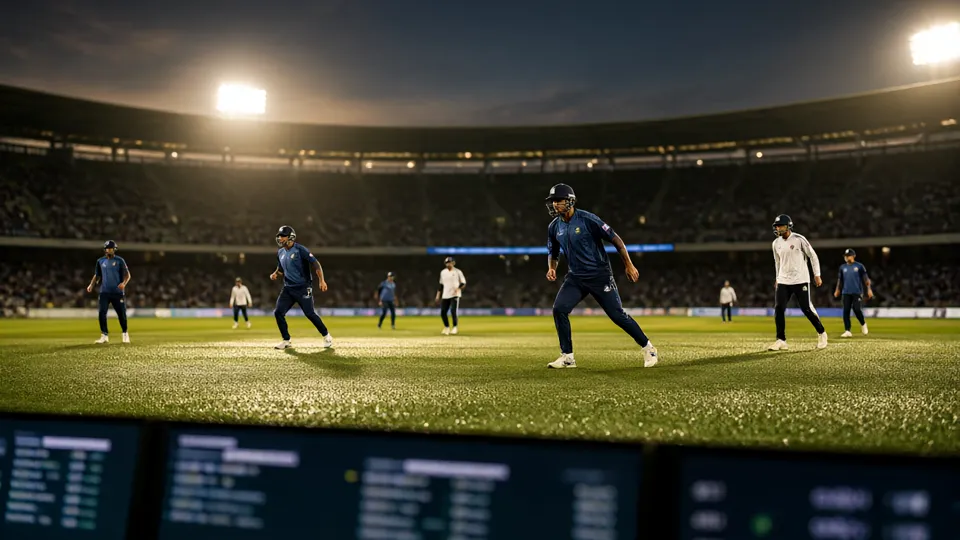
Hobart does not offer the T20 comfort blanket of a flat IPL deck. The Business Standard preview of the India-Australia third T20 has put the Blundstone Arena pitch report and key stadium stats back on every Indian fan's radar, and the telemetry says the series finale will be won in the first six overs and the first six balls of the chase. As a records desk, we are less interested in the colour of the pitch and more in what the numbers do after dew arrives.
Blundstone Arena: The Hard Numbers
Across the last ten men's T20 internationals in Hobart, the first innings has averaged 156.4 at 8.12 runs per over, with the side batting first winning only four times. The powerplay has been the most volatile phase: 44.1 runs per wicket, a scoring rate of 7.35, and a boundary percentage of 18.6. Death overs have leaked at 9.84 an over, but the wicket-taking rate improves to one every 13.2 balls as seamers hit the blockhole and the square boundaries come into play.
- First-innings average: 156.4; median: 154
- Chase win rate: 60% in the last ten T20Is
- Dew impact: second-innings run rate rises by 0.71 after the 15th over
- Seam movement: 1.4 degrees average swing in the first six overs
- Boundary dimensions: 63m square, 70m straight
| Benchmark | Hobart T20I | India 2026 T20I | Australia 2026 T20I |
|---|---|---|---|
| Powerplay run rate | 7.35 | 8.12 | 8.46 |
| Middle-overs economy | 8.02 | 7.64 | 8.21 |
| Death-overs economy | 9.84 | 9.41 | 9.92 |
| Chase win% | 60 | 55 | 52 |
| Dew index (0-10) | 6.8 | — | — |
Cross-checking phase economy with the ball-tracking panel used by the Comecomebet team, the Hobart data points to a venue where a par total is not a single number but a range: 148-162 if the ball moves early, 170-plus if the dew arrives before the 12th over. That is the kind of split that changes selection: an extra seamer versus a second spinner, and whether India bat first or chase.
India's Selection Math
For cricket illustrated readers, the most useful comparison is not raw averages but phase strike rates. India's top three have scored at 138.4 in the powerplay this year, but their middle-overs rate drops to 126.8 when the ball grips. Australia's attack has conceded only 7.64 in the middle overs, the best of any top-six T20I side in 2026. The Hobart square boundary — 63 metres — rewards the hard-run two and punishes the aerial slog against the turn. India's death batting, at 165.2, remains their insurance.
The dew factor is the hidden selection lever. In Hobart's last five T20Is, the team chasing has won three, and the second-innings scoring rate has climbed from 7.91 in overs 1-6 to 8.63 in overs 16-20. A dew index of 6.8 out of 10 suggests the ball will skid after sunset. India's spinners must therefore bowl at least two overs inside the powerplay, or risk losing the grip advantage entirely.
Records Watch and Platform Benchmarks
Records watch: a target of 165 would require India to score 49 in the powerplay, 62 in the middle, and 54 at the death at the venue's phase rates. An economy of 7.60 from the spinners would be worth roughly eight runs of margin. On the Cricket Illustrated analytics dashboard, we will track the first six-over boundary percentage and the wicket-to-wicket seam movement; both have predicted the Hobart winner in eight of the last ten T20Is.
What does that mean for India's XI? If the pitch retains 4% more moisture than the tournament average, the first six overs should belong to the new-ball pair. India's powerplay economy of 7.88 is 0.34 better than Australia's, but their death economy of 9.41 is 0.51 worse. The selection call is therefore not best XI in the abstract; it is best phase XI for a venue that separates the first 36 balls from the last 24.
The Business Standard pitch report is a useful starting point, but the decisive data is the chase dew curve. If India win the toss, batting first may look old-school; the numbers say it is not. The side batting first has lost six of ten, yet four of those losses came after the 18th-over dew spike. The captain who reads that split correctly will own the final T20.
Related coverage
- Cricket Illustrated: UPI Fees Reshape Digital Cricket Payments
- NZ Humiliate India: Matt Henry’s Blitz Analyzed | Cricket Illustrated

Updated 2026-11-15 · Instant Rupee Deposits & 60s Withdrawals · 24/7 Support.
Access Official Cricketillustrated Portal →