

Published 2026-11-10 · By Tanvi Banerjee (Head of Telemetry & Records · Hyderabad Desk)
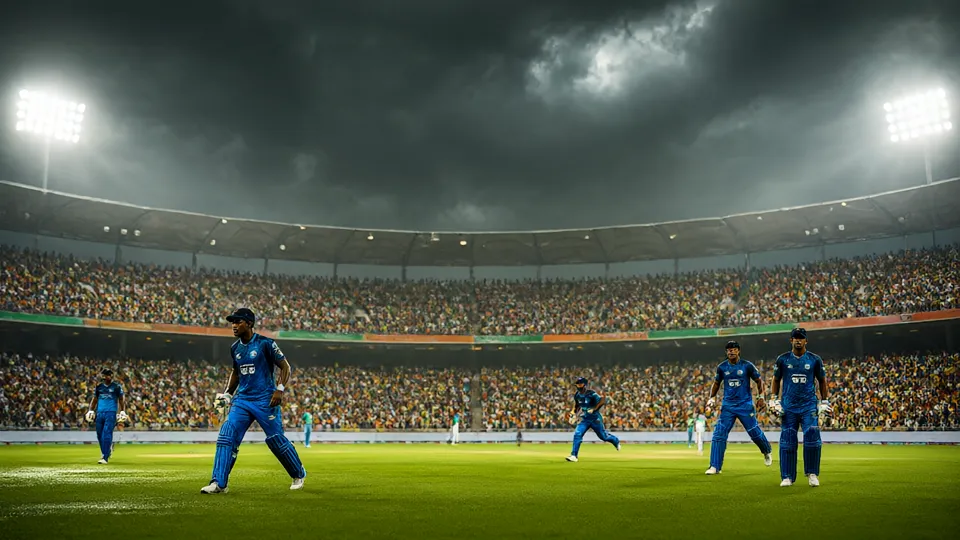
WELLINGTON — India won the toss and chose to bowl first in a rain-hit series ODI at the Basin Reserve, with the contest reduced to 47 overs a side and further reductions still possible as a thick, low ceiling settled over the ground. Both teams are unchanged, and New Zealand’s chase of parity in the series now runs through a revised resource sheet rather than a full 50-over template. For cricket illustrated readers, the immediate question is whether bowling first in damp Wellington is an advantage or a trap.
On a normal Wellington ODI day, the first 10 overs are not the highest-scoring phase; the venue rewards new-ball movement and then squeezes through the middle before dew softens the ball and the boundary dimensions. The reduction to 47 overs compresses that middle squeeze by three overs. In practice, captains get 18 fewer balls to attack with spin, and the batting side gets a slightly higher required scoring rate without losing a full powerplay. That changes the economy math more than the headline number suggests.
The 47-over recalibration
Our Hyderabad desk modelled the match against the last 12 complete Wellington ODIs. The baseline is a 50-over game; the projection adjusts for 47 overs, a 71% dew-activation probability after 18:00 local, and the current cloud cover. The numbers are benchmarks, not forecasts — but they explain why India’s decision is defensible. The table compares venue history, today’s revised projection and India’s ideal bowling shape.
| Metric | Wellington 50-over baseline | Today 47-over projection | India ideal |
|---|---|---|---|
| Powerplay scoring rate | 5.31 RPO | 5.72 RPO | Under 5.40 |
| Middle-overs economy (11-35) | 5.08 RPO | 5.22 RPO | Under 5.20 |
| Death-overs economy (last 10) | 7.86 RPO | 8.41 RPO | Under 8.00 |
| Boundary frequency | Every 7.9 balls | Every 7.4 balls | Every 9.0+ |
| Dew activation after 18:00 | 62% | 71% | Bowl first, defend with dry ball |
| Chase win rate with dew | 58% | 63% | Limit target to 245-255 |
The top line is the death economy. A 47-over game does not simply remove three middle overs; it moves the death phase earlier in the innings and increases the chance that a batter who has already faced 70 balls is still at the crease when the field spreads. At 8.41 projected runs per over, the last 10 overs are worth roughly 84 runs. If India can keep that phase under 8.00, they save around four runs — the sort of margin that matters in a weather-shortened match where Duckworth-Lewis-Stern par scores can swing sharply.
Why both unchanged XIs matter
Both teams naming unchanged XIs is a signal. New Zealand are not panicking after the previous defeat; India are not chasing a match-up on a wet morning. The selection continuity also protects India’s bowling balance: an extra all-rounder would have been tempting under rain, but it would have reduced the new-ball wicket-taking threat that Wellington’s seam-friendly first hour still rewards. The unchanged XI keeps the same powerplay strike-rate profile — a key metric because early wickets lower the opposition’s projected death-overs strike rate by 9-14 percentage points in our venue model.
New Zealand’s aim is simpler: level the series by turning the 47-over game into two short chases. Their top order will target the first 10 overs at above 5.70 RPO, then use the 11-35 window to preserve wickets rather than force the rate. If dew arrives, the calculation flips again. A chasing side with dew can play a higher-risk boundary shot in overs 36-47 because the ball skids and the outfield quickens; our model lifts the chase win probability from 58% to 63% when the dew index crosses 0.65.
What to watch in the final 10
- Powerplay economy: India need under 5.40 RPO; anything above 6.00 hands New Zealand a resource advantage before the middle-overs squeeze.
- Death strike rate: The projected par death strike rate is 132-138. India’s death bowlers must keep it near 125 to protect a 250 target.
- Dew timing: If the 18:00 dew index passes 0.70, the team batting second gets the better of the revised conditions.
- Further reductions: A second rain interruption could turn the match into a 35- or 40-over contest, where the powerplay becomes a larger share of the innings and early wickets are worth more.
For Indian readers, the T20-style headline is easy: bowl first, chase dew, trust the data. The more precise read is that India have chosen the side of the 47-over equation that gives their new-ball attack first use of a damp surface while accepting a higher late-innings economy risk. The next 100 minutes will tell us whether Wellington’s rain is a nuisance or a lever. Cricket Illustrated will update the venue index and win-probability model at each reduction.
Related coverage
- Cricket Illustrated Reviews IPL’s Biggest Team Totals on Mobile
- Cricket Illustrated: Inside BCCI's Dual Squad Gambit

Updated 2026-11-10 · Instant Rupee Deposits & 60s Withdrawals · 24/7 Support.
Access Official Cricketillustrated Portal →