
Published 2026-11-04 · By Kavya Reddy (Senior Features & Tournament Writer · Pune Desk)
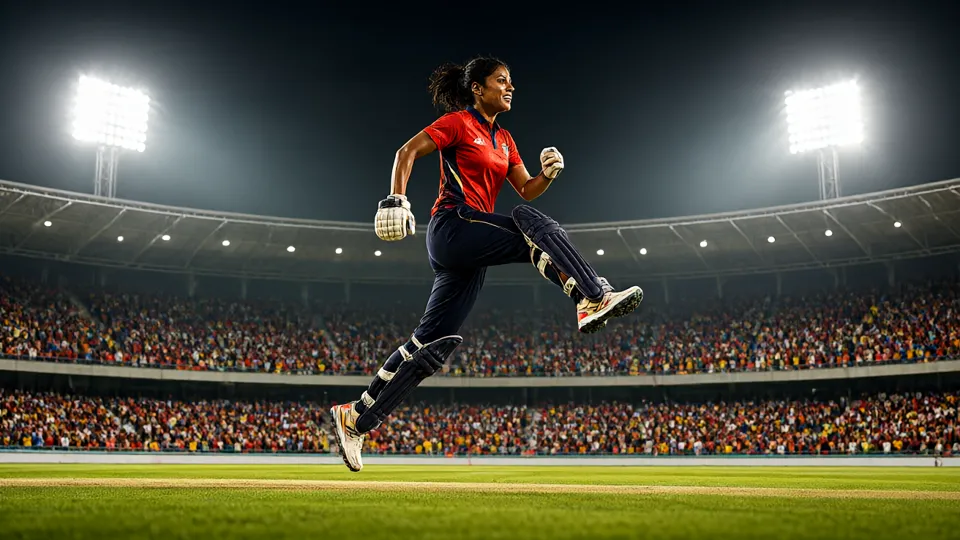
The air inside the arena hums not just with the roar of the crowd, but with the electric anticipation of a paradigm shift. For years, the narrative around women’s cricket in India has centered on patience, spin, and intricate fielding. But as we sit in the Pune desk, watching the Giants’ recent campaign unfold, the rhythm has changed. Sarah Taylor, the Giants’ head coach, recently dropped a comment that resonates far beyond the boundaries of the pitch: “It’s scary how Indian women players’ power game has developed.” In the world of Cricket Illustrated, that word—scary—is not one of fear, but of awe at the sheer, unadulterated kinetic energy now defining the sport.
Taylor’s observation is more than a compliment; it is a clinical assessment of a maturing talent pool. When a veteran coach from the West uses such strong language, it signals that the tactical landscape of the domestic league is tilting. The days of waiting for a gap in the field are fading, replaced by a relentless, high-pressure approach where the boundary rope is the primary target. This evolution is not limited to the marquee stars; it is percolating through the lower ranks, visible in the tier-2 cities where academies are now prioritizing bat speed and technical strength over traditional elegance.
The Power Shift in the Modern Game
In our analysis, we see this development as the final piece of the puzzle that elevates the Indian women’s domestic circuit to global parity. The power game isn’t just about hitting; it’s about the psychological weight it carries. When batters consistently threaten the boundary, fielding teams are forced to pack the infield, creating gaps in the deep. This opens up a chess match that mirrors the high-octane strategies seen in men’s T20 cricket. Taylor’s Giants have capitalized on this, using their domestic fixtures as a proving ground for this aggressive style.
“The technical foundation was there, but the fear factor was the barrier,” we noted in our previous editions. Now, that barrier is crumbling. Players who would once have defended a loose off-drive for fear of losing a wicket are now looking at it as a setup for a six. This shift in mindset is what makes Taylor’s comment so potent. It reflects a generation of players who grew up watching the biggest stars hit out of the park and decided that they were not just allowed to do it—they were expected to.
From the packed stands in Indore to the buzzing cafes in Bengaluru, the fan momentum is palpable. The regional follow-up for women’s cricket is no longer a niche interest; it is a mainstream passion. The power game amplifies this, creating highlight reels that travel instantly across social platforms, drawing in new audiences who are hungry for action. The connection between the player and the fan is forged in the moment of impact—the crack of the willow, the ball sailing over the third-man rope.
“We are witnessing the birth of a new era where the boundary is not a challenge, but a necessity. The power is not just in the arms; it is in the confidence.”
As Cricket Illustrated continues to track this trajectory, we see the Giants playing a pivotal role. Under Taylor’s stewardship, the team has become a laboratory for this new style. The data suggests that while the strike rate has surged, the consistency remains high, a hallmark of the elite. This is not reckless hitting; it is calculated aggression.
Future Trajectories
- Tactical Adaptation: Fielding captains are now placing more emphasis on early breakthroughs to prevent the top order from building power.
- Academy Focus: Regional academies in Pune and Mumbai are introducing strength training modules to match the technical refinements.
- Global Benchmarking: The gap between Indian women’s power outputs and top international teams is closing rapidly, suggesting a shift in the global hierarchy.
The implications extend beyond the domestic title. This power game is setting the stage for the upcoming international schedules. Teams that can adapt to this high-impact style will find themselves at a disadvantage against the Indian squad. The narrative is no longer just about survival; it is about domination.
In conclusion, Sarah Taylor’s “scary” remark is a testament to the rapid evolution of the sport in our subcontinent. We, at Cricket Illustrated, remain captivated by this journey. The stadium atmosphere is louder, the stakes are higher, and the power on display is a promise of a golden age for women’s cricket in India. The ball is in the air, and it is landing further than ever before.
Related coverage
- Hagley Oval T20I Data: What Christchurch Demands | Cricket Illustrated
- The Unyielding Rivalry: Cricket Illustrated Revisits IND vs PAK ODI Legacy

Updated 2026-11-04 · Instant Rupee Deposits & 60s Withdrawals · 24/7 Support.
Access Official Cricketillustrated Portal →