
Published 2026-11-02 · By Tanvi Banerjee (Head of Telemetry & Records · Hyderabad Desk)
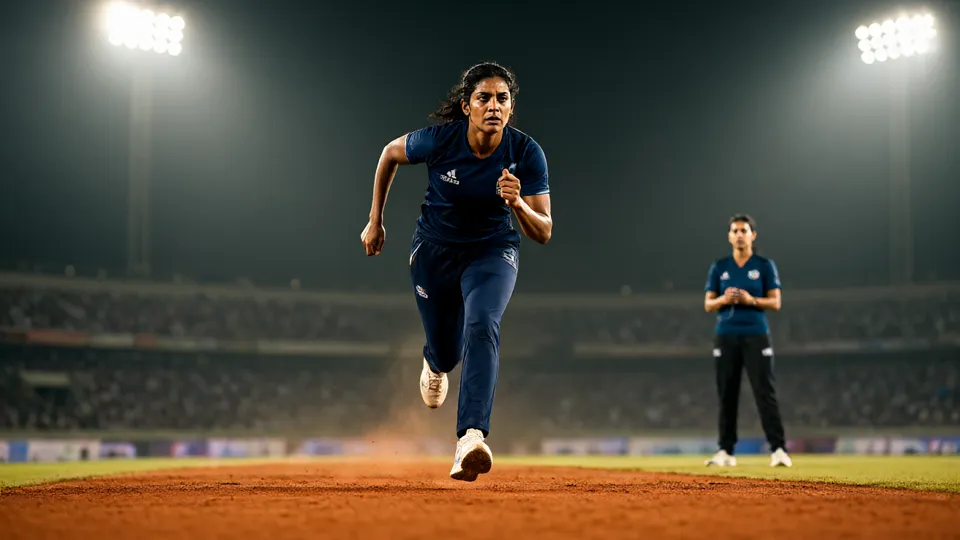
Jemimah Rodrigues has cleared the most important checkpoint of her comeback: the hamstring has been declared fit. After three months of rehab, the India batter is back in the selection frame for December’s multi-format tour of South Africa. At Cricket Illustrated’s Hyderabad telemetry desk, the read is not simply that a wristy middle-order option is available again. The read is that India must decide whether her pre-injury strike-rate profile can survive South Africa’s December dew, bounce and sprint load.
Rodrigues’s value has always been tempo. In T20Is, her best phases sit in the 120–135 strike-rate band, with boundary rate and hard-run twos doing as much damage as sixes. In ODIs, she is a 70–80 strike-rate accumulator who converts pressure into rotation. The hamstring injury attacks exactly that skill: the deceleration before the second run, the turn at the non-striker’s end, the low crouch before a sweep. A fit certificate is necessary; it is not a performance guarantee. For a player whose T20I boundary rate sits around 1.7–1.9 per 10 balls in good phases, the first two innings back should be judged on scoring shots without a visible deceleration lag, not on raw runs.
What the rehab data must prove
Three months is a standard return window for a moderate hamstring strain, but the final gate is not pain-free walking. It is repeatable high-speed running. For a batter who scores roughly 35–40% of her T20I runs in twos and threes, the key metric is sprint exposure per innings. If Rodrigues faces 30 balls, she may complete 12–16 acceleration-deceleration cycles. In a South African evening game, dew can add 0.2–0.4 seconds to reaction and turn, increasing the load on the posterior chain. The return-to-play dashboard should also track sprint symmetry within 5%, a false-shot rate under 12%, and strike rotation above 90% in intra-squad overs. Those are unglamorous numbers, but they separate a fit hamstring from a match-ready one.
Her part-time off-spin is a secondary data point. The T20I economy benchmark for a sixth bowler is 7.50 or better; Rodrigues has been used sparingly, and India should not force that workload in the first two matches. The selection question is batting tempo, not bowling economy. If she does bowl, the more useful metric is not wickets but economy under dew: anything above 8.20 in the middle overs would signal that the hamstring is protecting her action.
South Africa’s December dew map
Dew is the hidden selector. Coastal venues in December can produce a wet outfield by the 12th over of an evening T20I, reducing spin grip and increasing the value of boundary hitting. At Kingsmead, the dew factor is high; Newlands is medium-high with crosswind; Wanderers is medium but bouncier. For Rodrigues, the trade-off is clear: the wetter the ball, the easier the scoring; the wetter the outfield, the harder the stop-start running. India’s team economy in the middle overs also shifts by venue: a high-dew night can add 0.4–0.6 runs per over to spin, which is why a batter who can access the leg side against wet-ball skid becomes a tactical asset.
| Benchmark | Pre-injury band | Return gate | South Africa December risk |
|---|---|---|---|
| T20I strike rate, powerplay | 125–132 | 120+ in warm-up | Dew helps hitting but slows initial footwork |
| T20I strike rate, middle overs | 112–118 | 115+ with under 10% sprint risk | Newlands crosswind raises load on twos |
| ODI strike rate, first 10 overs | 72–76 | 70+ and 90% rotation | Wanderers bounce rewards back-foot play |
| Boundary rate per 10 balls | 1.7–1.9 | 1.6+ without deceleration lag | Wet outfield reduces the value of hard twos |
| Part-time off-spin economy | 7.6–8.2 | 7.5 or better | Dew reduces grip and increases release risk |
| Dew factor, evening | — | — | Kingsmead high; Newlands medium-high; Wanderers medium |
The table is not a prediction; it is a selection checklist. India’s T20I middle order has enough left-right combinations to ease Rodrigues back at No. 4 or No. 5, where she can rotate strike before the field spreads. The ODI plan should be more conservative: one full 50-over innings in the first two matches, then a reassessment of her sprint load. South Africa’s seamers will test her first movement with back-of-hand slower balls and cross-seam bounce; their economy in the middle overs tends to sit near 7.4 when the ball is dry and closer to 7.9 when dew arrives.
The selection call
The data-first call is to use Rodrigues in the T20I middle order first, cap her ODI load, and hold the part-time spin until the series is secured. If her post-rehab sprint data holds, she returns not as a sentimental comeback story but as a tempo multiplier. That is the Cricket Illustrated benchmark: fit is the entry point; repeatable strike rate under dew is the proof. India’s December assignment will not be won by a medical clearance alone. It will be won by the first 20 balls Rodrigues faces in South Africa.
Related coverage
- Powerplay Clash: India’s New Guns vs Zimbabwe – Cricket Illustrated
- Cricket Illustrated: Inside Manish Pandey's Rising IPL Data Footprint

Updated 2026-11-02 · Instant Rupee Deposits & 60s Withdrawals · 24/7 Support.
Access Official Cricketillustrated Portal →